Hay Fever Nightmare
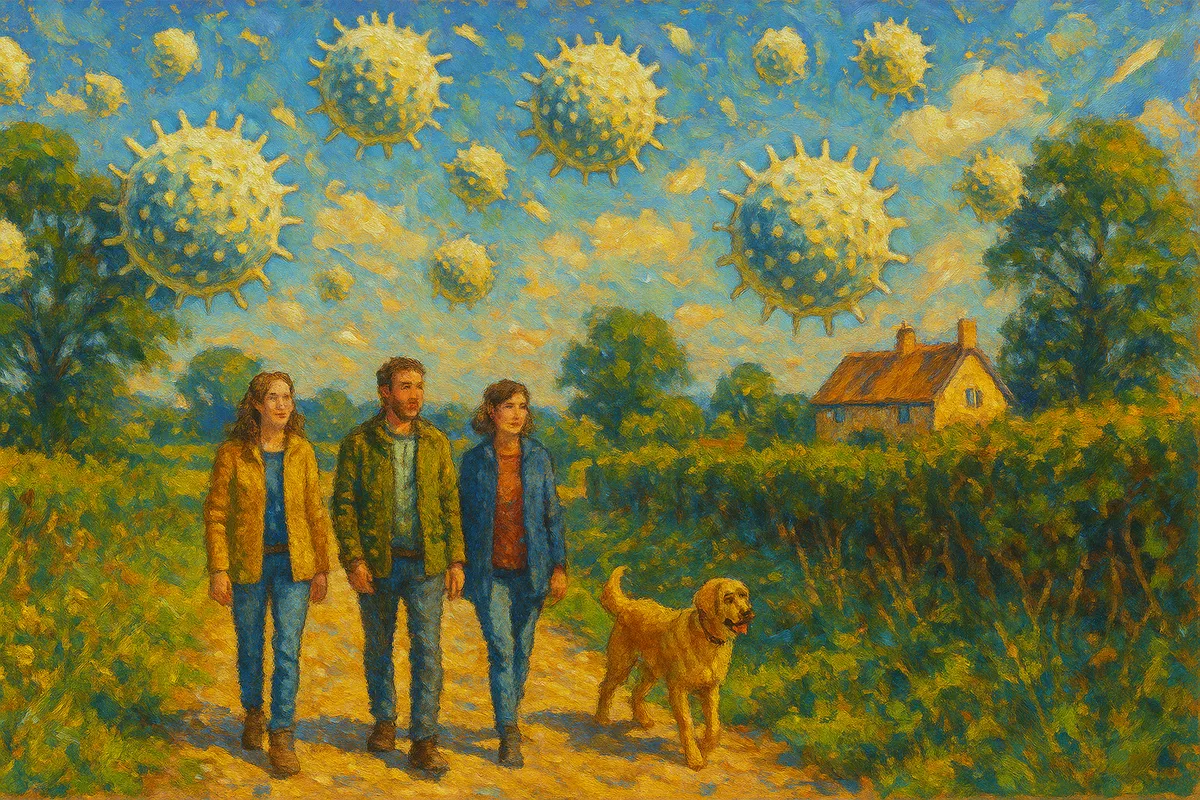
Welcome to the post-covid world, and yet another icky symptom of aging. Now, I say aging as a negative thing, but for some younger people unfortunate enough to have had hay fever from a young age, there is some good news - you may grow out of it. For the rest of us poor fuckers, age and post covid adjustments to our immune systems mean we're just getting it for the first time... and like WTF dude!
This article is aimed at anyone currently coming to terms with this immune system based fuckery. The article will detail the tree and plant-bastards responsible for this, the times when this is likely to hit, the complications of the condition (did you know that Alcohols have Histamine in? - like holy fuck tree-spunk, Batman!), and finally the list of mitigations to place smack in the middle of this shit to make life liveable when those tree-bastards spunk their polleny loads into the air!
Right, picture this: one minute you’re minding your own business, feeling fresher than a mint in a gin & tonic, and the next—bam!—Mother Nature whips out her microscopic ninja-shuriken (a.k.a. pollen) and turns your head into a fucking snot laden hose. Your eyes swell like you’ve just binge-watched Love Island on repeat (no, don't, ever!), your nose starts a mucus slip-n-slide worthy of Alton Towers, and every sneeze launches your soul three postcodes north. Motherfucker, it’s like having a tiny lawn-mower stuck up each nostril, revving away at full throttle while some sadistic garden gnome sprinkles itching powder over your eyeballs for shits'n'giggles.
Timing - don't get me fucking started, nature is a cunt - beer gardens look chef’s kiss, and suddenly it's eyes streaming more than a dodgy IPTV box. One rogue gust of grass pollen and you’re fucked, flapping your arms like a malfunctioning windmill. You try to act casual, but a single sneeze detonates so hard the pigeons apply for hazard pay and your Smart Watch thinks you’ve just done a sprint session, or had a crafty wank.
Then come the “helpful” comments: “Have you tried local honey?” Yes Fucktard, I’ve consumed so much fucking honey I sweat bastard beeswax. Still dripping. Meanwhile the ragweed’s out there doing lines of coke, getting high AF, and drop-kicking my sinuses into next week.
So if you spot a grown adult staggering around blinking like a knackered lighthouse, swearing at invisible clouds and generating enough nasal runoff to irrigate the fucking county with their nose, give teh slack. They're not hung-over, just locked in mortal combat with Britain’s tiniest, most vindictive airborne bastards.
The information is all over the internet, so here is a giant-ass summary of all the infos I've found with the help of our new robot overlord, GPT!...
Onto the fucking data. Yes, everything in this whole cluster fuck is fucking-something-or-other...
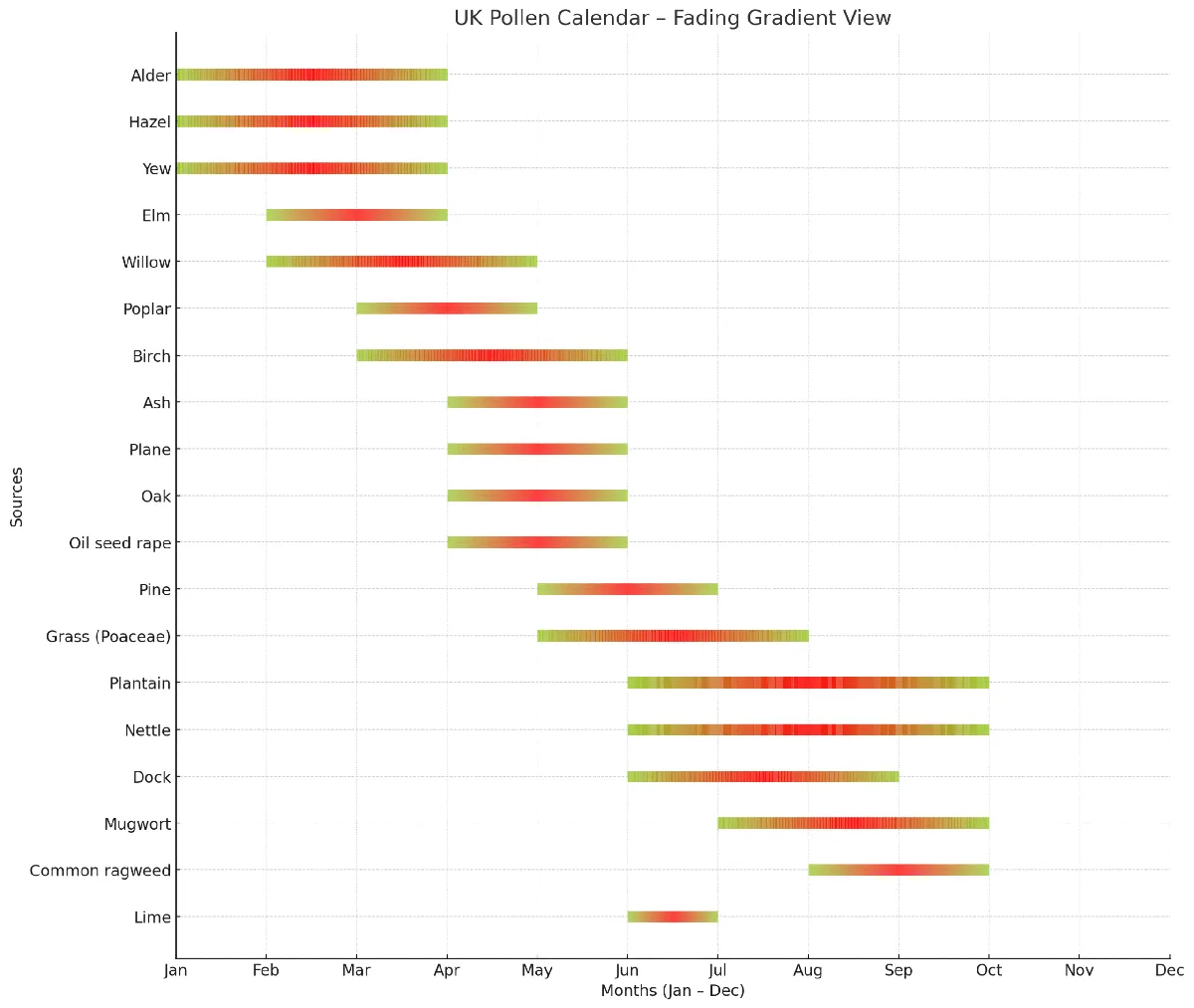
Here's the date-data, when you're gonna be hit in the gonads with this shit
| Source | Season Months | Peak Months | Expected Effects |
|---|---|---|---|
| Alder | Jan–Apr | Feb–Mar | Early-season nasal congestion, sneezing, itchy eyes |
| Hazel | Jan–Apr | Feb–Mar | Watery eyes and sneezing in late winter/early spring |
| Yew | Jan–Apr | Feb–Mar | Mild rhinitis and itchy throat in winter-spring |
| Elm | Feb–Apr | Mar–Mar | Runny nose and itchy eyes in early spring |
| Willow | Feb–May | Mar–Apr | Moderate sneezing, eye irritation |
| Poplar | Mar–May | Mar–Apr | Eye irritation from ‘cotton-wool’ fluff plus nasal symptoms |
| Birch | Mar–Jun | Apr–May | Severe rhino-conjunctivitis; oral-allergy syndrome to raw fruit & nuts |
| Ash | Apr–Jun | Apr–May | Nasal symptoms; can worsen asthma in April-May |
| Plane | Apr–Jun | Apr–May | Urban rhinitis with itchy eyes |
| Oak | Apr–Jun | May–Jun | Moderate, long-lasting nasal congestion, sneezing |
| Oil seed rape | Apr–Jun | May–May | Strong odour & cross-reactive pollen irritate eyes, nose, throat |
| Pine | May–Jul | Jun–Jun | Usually milder; large grains cause throat irritation |
| Grass (Poaceae) | May–Aug | Jun–Jul | ≈95 % of UK cases; intense sneezing, itchy eyes, thunder-storm asthma risk |
| Plantain | Jun–Oct | Jul–Aug | Late-season nasal congestion, watery eyes |
| Nettle | Jun–Oct | Jul–Aug | Rhinitis; contact can cause nettle rash (urticaria) |
| Dock | Jun–Sep | Jul–Jul | Mid-summer sneezing and stuffy nose |
| Mugwort | Jul–Oct | Aug–Aug | Late-summer rhinitis; cross-reacts with celery & spices |
| Common ragweed | Aug–Oct | Sep–Sep | Potent late-autumn allergen; severe rhinitis, asthma risk (increasing in UK) |
| Lime | Jun–Jul | Jun–Jun | Short season; mild rhinitis |
Data-data in a handy table, thanks @GPT
And for some regional differences in the UK:
| Region | Tree Season Shift vs UK Avg | Grass Season Shift vs UK Avg | Weed Season Shift vs UK Avg | Typical Peak Intensity | Key Notes |
|---|---|---|---|---|---|
| South-East England | ≈ 2 weeks earlier | ≈ 1 week earlier | On time | High | Warmer, drier; highest birch & grass counts |
| South-West England | ≈ 1 week earlier | On time | On time | Moderate–High | Mild Gulf-Stream climate; spores also abundant |
| Midlands (central) | On time | On time | On time | High | Large agricultural grass acreage |
| North England | ≈ 1 week later | ≈ 1 week later | On time | Moderate | Cooler spring delays tree & grass germination |
| Wales | On time | On time | ≈ 1 week later | Moderate–High | Maritime air keeps weeds active later |
| Scotland (Lowlands & Highlands) | ≈ 2 weeks later | ≈ 2 weeks later | ≈ 2 weeks later | Lower | Shorter growing season, fewer grass species |
| Northern Ireland | ≈ 1 week later | On time | ≈ 1 week later | Moderate | Oceanic climate dampens peaks but prolongs weeds |
Alcohol - Oh Fucking NO!
When grass pollen lands on your nasal/eye membranes it triggers mast-cells to dump endogenous histamine (the bastard) into your feeble flesh. Alcohol simultaneously adds exogenous histamine (as per the table below) and slows diamine-oxidase (DAO), the enzyme that clears histamine from your gut & bloodstream. That “double-hit” means even quite small dietary amounts (≥ 0.1 mg per drink) can push you over your personal symptom threshold when airborne pollen is already keeping your baseline levels high thanks to bastard plant-spunk cluttering up the air.
Tips to keep symptoms down on a pub night:
- Pick clear spirits or young white wine instead of red, cider or heavily dry-hopped craft lagers.
- Dose your non-sedating antihistamine (e.g. cetirizine 10 mg) 30 min before your first drink – it covers both pollen & Drink-derived histamine.
- Hydrate between drinks – alcohol-induced dehydration concentrates histamine.
- Avoid other high-histamine nibbles (cured meats, aged cheese) in the same sitting.
- Finish early – DAO inhibition can linger for 4–6 h; keeping your total intake and finish time modest limits disturbed sleep and next-day congestion.
- With those adjustments most hay-fever sufferers can still enjoy a social drink during the UK’s peak pollen weeks without adding a pounding head and streaming nose the morning after. Cheers, and keep the tissues handy!
| Alcohol type | Typical histamine (mg / L)* | Broad published range (mg / L) | Histamine per UK serving** (mg) | Likely effect on a hay-fever sufferer in May |
|---|---|---|---|---|
| Lager (4 % ABV, bottom-fermented) | 0.20 | 0.03 – 0.50 ; rare specialty beers ≤ 1.9 | 0.11 mg in a pint (568 ml) | Very small extra load – most people feel no worse, though alcohol slows DAO so congestion may linger if you’re already bunged-up. |
| Cider (traditional, unfiltered) | 1.15 | 0 – 2.3 (some artisanal batches ≤ 6 +) | 0.65 mg in a pint | Noticeable for sensitive noses: many report itchier eyes & sneezes within 30–60 min on high-pollen days. |
| Vodka (triple-distilled, unflavoured) | ≤ 0.05 | “negligible” – distillation strips amines | ≤ 0.002 mg in a 35 ml shot | Virtually histamine-free; main risk is DAO inhibition, so symptoms only marginally worse than any neat spirit. |
| Whisky / Whiskey (barrel-aged) | ≈ 1.0 | Data sparse; ageing can approach EU 2 mg/L cap | ≈ 0.04 mg in a 35 ml single | Small dose, but wood congeners + alcohol amplify mast-cell release; some notice flushing or stuffy nose after one dram. |
| Red wine | 1.01 | 0.06 – 3.8 (60 – 3800 µg/L) | 0.18 mg in a 175 ml glass | Classic trigger: extra histamine + DAO blockade → quicker headache, nasal drip & flushing. |
| White wine | 0.037 | 0.003 – 0.12 (3 – 120 µg/L) | 0.007 mg in a 175 ml glass | Usually well-tolerated; any worsening is mostly sulphites not histamine – safer than red on “High” pollen days. |
- Typical value = mid-range figure from UK-relevant analytical studies or regulatory guidance.
- ** Serving sizes = UK standard on-trade measures: pint (568 ml) for beer/cider, 35 ml single for spirits, 175 ml “regular” wine glass.
- *** Published Whisky figures are scarce; the estimate reflects the EU guideline that alcoholic drinks should remain below 2 mg/L of histamine, and the consensus (from barrel-ageing studies and histamine-intolerance clinics) that most whiskies sit around the 0.5–1.5 mg/L mark.
Finally, let's fix this bastard - gogo gadget Drugs!
(Don't forget to check if these bastards will send you to sleep... best not take the sleepy-time ones, 'eh?)
| Measure / Method or Drug | Brand & UK Availability | Dose & Optimal Timing | Key Side-effects / Limits | Why it works & pro tips |
|---|---|---|---|---|
| Cetirizine 10 mg (2nd-gen antihistamine) | Zirtek, Piriteze – GSL | 10 mg once morning; 1 h pre-exposure when counts high | Mild drowsiness (≈ 1 in 8), dry mouth; avoid excess alcohol | 24 h H₁ blockade; non-sedating in most; OK from age 6 |
| Loratadine 10 mg | Clarityn – GSL | 10 mg once daily am or mid-afternoon for evening events | Headache, dry mouth; sedation < 2 % | Long half-life; minimal brain entry → safe for drivers |
| Fexofenadine 120 mg | Allevia, Treathay – Pharmacy ℗ | 120 mg once daily fasted am (food delays absorption) | Very low sedation; dyspepsia; antacids cut absorption | Strongest OTC antihistamine; good when others fail |
| Chlorphenamine 4 mg (1st-gen) | Piriton – GSL/Pharmacy | 4 mg every 4–6 h (max 24 mg); bedtime preferred | Marked drowsiness, blurred vision; anticholinergic load | Sedating itch relief; useful rescue for night congestion |
| Fluticasone nasal spray 50 µg | Flixonase Allergy Relief – GSL | 2 sprays/nostril once am (200 µg); start 2 w pre-season | Nasal dryness, epistaxis (6 %); improper angle ↑ risk | Topical steroid; max effect after 3–5 d |
| Beclometasone nasal spray 50 µg | Beconase – GSL | 2 sprays/nostril bd | Taste disturbance; throat irritation | Budget steroid; split dose meets two daily peaks |
| Azelastine 0.1 % nasal spray | Rhinolast – Pharmacy ℗ | 1 spray/nostril bd; onset 15 min | Bitter taste (20 %), burning; mild sedation (2 %) | Local antihistamine + mast-cell blockade; quick ‘rescue’ |
| Dymista (azelastine + fluticasone) | Dymista – Rx only | 1 spray/nostril bd | As above combined; pricey; taste issues | Dual action tackles severe nasal rhinitis |
| Sodium cromoglicate 2 % eye drops | Opticrom – GSL | 1–2 drops/eye 4–6×/day; start 7 d early | Transient sting; frequent dosing needed | Mast-cell stabiliser; drug-free in bloodstream; safe pregnancy |
| Olopatadine 0.1 % eye drops | Opatanol – Rx | 1 drop/eye 08:00 & 20:00 | Temp blurred vision; bitter taste | Fast dual-action (H₁ + stabiliser); lasts 8 h |
| Montelukast 10 mg | Singulair – Rx | 10 mg evening | Dream disturbance, mood shift (rare); headache | Leukotriene antagonist; add-on if asthma + rhinitis |
| Grass-pollen sub-lingual immunotherapy | Grazax, Oralair – Specialist Rx | 1 tablet under tongue daily, start ≥ 8 wk pre-season; 3 yr course | Oral itching, anaphylaxis risk – first dose supervised | Induces long-term tolerance; reduces symptoms years after completion |
| Barrier balm (nostrils/eyes) | HayMax – GSL | Smear before going out; re-apply q 2 h or after blowing nose | Greasy; less effective in wind/very high counts | Traps grains at entry; drug-free aid for kids, pregnancy |
| Wrap-around sunglasses + baseball cap | Any sports wrap lenses + peaked cap | Wear outside 10 am-4 pm on High days | No nasal protection; heat build-up | Blocks ~60 % eye pollen; visor stops top-down drift |
| HEPA air-purifier (H13-14) / car pollen filter | Dyson, Philips, Blueair; cabin filters Halfords/OEM | Bedroom: run overnight windows closed, CADR ≥ 5 × room volume/h (e.g. 48 m³ ⇒ ≥ 240). Car: recirc + AC; replace cabin filter yearly | Ineffective if windows open; noise ≤ 50 dB; small units (< 100 m³ h⁻¹) undersize living rooms | Removes ≥ 99.95 % ≥ 0.3 µm particles; place ≥ 0.5 m from walls toward bed; 5 ACH cuts counts 80 % in 2 h |
| Daily shower & clothes change | — | Shower & wash hair immediately on return home; outdoor clothes to wash basket | Water/energy use; impractical midday | Rinses grains off skin/hair; stops transfer to sofa/bedding |
| Check live pollen forecast & plan | Met Office app, NPARU site | Check night before; schedule runs pre-10 am or post-4 pm | Activity limitations; forecasts most accurate ≤ 48 h | Avoidance halves exposure; combine with mask if you must go out |
*Finally, if you've read this far, hopefully you'll have absorbed just enough extra ammo against the plant-bastards to have more than a snowball in hell against this ubah-fuckery!
You're welcome - Spabbit.*